Showing posts with label PNWA Conference. Show all posts

Monday, July 29, 2013

Back on the Roller Coaster

My personal fave: Santa Cruz Beach Boardwalk's Giant Dipper (pic: entertainmentdesigner.com)
I went to my first writers' conference in a few years and found it as exciting and devastating as ever. They hold the Pacific Northwest Writers Conference a stone's throw from Sea-Tac airport, and the Hilton charges $10/day for parking with no in-out privileges, which ensures that everyone who attends the conference has neither the temptation to skip the sessions and wander the neighborhood, nor the financial means to do so. I did venture outside so far as the 7-11, where I went on a scavenger hunt for the item in the store most resembling actual food, but that was about it.

For other budding writers out there, I do highly recommend the conference. It's a great mix of sessions on craft and business, the other writers are friendly, and you get an opportunity to pitch to agents and editors (more on that below). They've also seriously beefed up the sessions on ebooks and self-publishing since I was last there, but since I've been-there-done-that, and since my son had an exactly simultaneous swim meet in Federal Way, I skipped those bits (and wheedled one get-out-of-parking-free pass from the nice Hilton guy).

But back to the roller coaster metaphor.

Have you ever been on a ride and thought, when the safety bar came down across your lap, or the five-point belt locked over your chest, what the heck am I doing on this thing? Let me OFF!!!!! ? Well, on a whim some months ago, when I was most in my Jane-Austen-knockoffs mood, I whipped up a few chapters of a frothy "Regency" romance and sent it in to the PNWA Literary Contest. (Note: my book isn't technically Regency, since it's set in 1808, but let's not split generic hairs. Best to call it "in Jane Austen's day.") Along about May I got a call from Pam Binder, the PNWA President, to say The Naturalist had been chosen as a finalist. Yippeeeeeeee, I thought, and immediately signed up for the conference. I pictured myself standing atop Victory Mountain, agents and editors clamoring at my feet. I was locked in and going for the ride.

Then there was Climb #1: I hadn't actually finished the thing. I was back to my Rome women's fiction book. But I had to finish The Naturalist, right? Otherwise, what would I give the clamoring agents and editors? Whew. School was getting out in a month, and I had to get 'er done. I buckled down and cranked it out. A story I loved.

The Rapid Descent Where You Scream Your Head Off and Despair: on the second day of the conference I sat in on a talk about women's fiction and romance, and one of the primary agents I hoped to pitch said unequivocally that she was "Regencied out." Regencied out?

You and me both, Homer. You and me both.
After hanging out on those sites and blogs devoted to Austen sequels, continuations, retellings, etc. etc., I couldn't imagine anyone could say this. The danged Austen only wrote six books--didn't we fans need a constant supply of Austenesque reading material to keep us going? How could anyone be Regencied out? To add to my kicked-in-the-gut feeling, this particular agent happened to look a lot like (and share mannerisms of) a friend of mine, so I felt like it was Molly (totally her real name) telling me she was through. So strong was that feeling that I went up afterwards and tried to explain myself: it's a Regency, sort of, but with a twist! Really, really, Molly--I mean Agent--you shouldn't write it off! The agent was friendly and polite and probably spent the walk back to her hotel room glancing over her shoulder, in case this weirdly insistent woman decided to follow her.

That's what I'm talking about. (pic: River Bottom Blues)

The Loop-the-Loop and Spin. I used to love rides that incorporated spinning and upside-downness. I viewed with scorn the moms who would sit on the bench, holding the jackets. Well, it's been some years now that the spinny things make me want to hurl, and when someone has to wait it out and hold the jackets, my hand shoots up: pick me! Pick ME! The spinning and wanting-to-hurl aptly describes the speed pitching session at the conference. You've got four minutes to make someone fall in love with you and your project. Like speed dating, only worse. Worse because it's not someone rejecting YOU for being dog-ugly or watching-paint-dry boring (bad enough), it's someone rejecting your BABY for being not cute enough. And they were able to come to that conclusion in four short minutes.

I hung on for this portion of the ride and managed to convince a few agents and one editor that my baby was cute. Two people requested full submissions, for which I wanted to ask them to marry me--except, while gay marriage is now legal in Washington, bigamy isn't, so I had to refrain. Another few requested partials. I was riding high.

But then another wave of stupid hit me. There sat Molly--I mean that one Agent--toward the end of one table, and I was drawn to her like a seagull to discarded French fries. Yes. Despite her declaration of being Regencied out, and despite already bugging her the day before, I decided to pitch to her. Halfway through my spiel, Agent-not-Molly says, "I've read this book before."
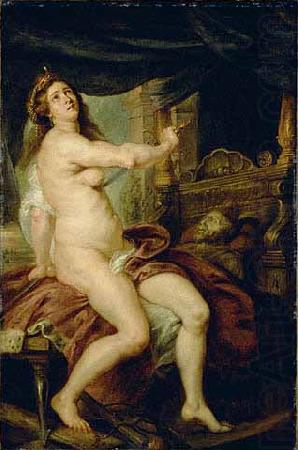
Can I borrow your sword, Panthea, when you're done with it?

"Noooooooo!!!!" I cried (aloud). "You read this? Someone already wrote this book???"

Agent nodded thoughtfully as I collapsed across the pitch table. "No, really," she said. "I just read this book."

Now, I grant you, romances can be formulaic, but every other person I'd pitched to had said something along the lines of, "I like this particular bit. It's different." Being told that not only was the book not original, but someone had already written the darned thing, point-for-point-- Well, that was like the roller coaster getting stuck while everyone was upside down, and the lady above you barfing on you. Exactly like that.

It took me a second to recover, courtesy of a Eureka! moment. But the Eureka! moment was nearly as devastating.

"Wait a second," I said. "You probably have read it. Did you read for the Literary Contest?" (The Contest lets an agent or editor choose the final winners.)

She had.

Which meant--thank God--someone out there had not already written my book, point-for-point, and sent it to her. That was the good news.

The bad news was that it meant I had lost the contest. Of all the agents who could have done the final judging, it fell to the one who was Regencied out. Waaaaaaaaaaa. Sure enough, later that evening, the winners were announced and stood atop Victory Mountain while I waited at Base Camp with the oxygen tanks. Bummer. Yes, yes, it's an honor to be nominated, but frankly that honor wears off after a week. To add insult to injury, the emcee announced triumphantly that both the 2nd and 1st place Romance winners' manuscripts were requested by none other than Agent-not-Molly.

Not that Agent-not-Molly meant to be cruel. She was actually very kind. After my collapse at the pitch table, she asked to see fifty pages of The Naturalist (maybe she needs kindling for her fireplace).

"Are you asking out of pity?" I demanded.

"No, no! I'd like to see it," she said convincingly, looking and sounding so much like Molly that I probably will bother to send it, even if it's just a waste of electrons into the void.

I came home a strange mix of elated and discouraged and told my husband in the space of five minutes how excited I was to send stuff in and that, on the other hand, maybe I would quit writing altogether. He heard me out because--heck--he's been married to crazy for almost nineteen years.

The writing life is just like the roller coaster. You wait in line for hours in the boiling sun to thrill and scare yourself to death; you wish you never got on, but then you have the time of your life, and, right after you're let off, you get back in line again. Here we go, folks!

Monday, July 26, 2010

Outtakes from a Conference

The remaining two days of the conference were a total blur, but I did glean a few more nuggets.

  • The average traditionally-published book takes 18 months to hit the shelves. The countdown starts from when the book is sold, so not included are the months and years you took to find an agent and for the agent to sell the book. Of course, if you're not a first-time author, you can just estimate 18 months. The long lead time consists of editing, marketing, galley reviews, publicity, sales, etc. At gunpoint a book can be gotten out in under a year, but such "crash" books are few and far between.
  • The Editors Panel rejected the notion that editors no longer edit. One said specifically, "First-time authors need a lot of work." Not for grammar, presumably, but for storyline. I would agree with this. When I considered whether MBC could be cut down from 130,000 words (I got it to 127,000 or so), I would have loved a professional opinion.
  • Traditional publishing remains "very incestuous." Everyone knows each other; everyone talks. Too bad for me, since my son's swim meet meant I was a no-show for my speed-pitching appointment with five agents and then had to try to cancel a later one-on-one. I'll be known as "the flaky one." But hey--my son will still be talking to me ten years from now.
  • It's not impossible to go from self-published to traditionally-published, especially if you're talking about a non-fiction work. With fiction, unless you sold bazillion copies out of your trunk or electronically, publishers might be more interested in what else you have. Your next project, which they can then sell to that base you knocked yourself out building.
One agent who represents everything from children's picture books to YA/adult crossover listed her "five secret ingredients to good fiction":
  1. A unique, fresh voice. Authentic and age-appropriate. Avoid too much slang and use profanity as a "spice" only when necessary.
  2. Memorable, dynamic characters whose lives can be imagined going on after the book ends. They don't have to be likeable, necessarily, but the reader has to be able to connect.
  3. Coherent and satisfying narrative structure. Everything in the story is there for a reason, and the reader is carried forward from the very beginning. Imagine arriving at a party "fashionably late." That's when your reader should come into the story
  4. The universal in the idiosyncratic. Every story has already been told. What is your unique angle?
  5. Literary voice with commercial conception. Has to be pitchable. What if you thought you were an ordinary, neglected boy, but then you found out you had magical powers and people hoped you would one day defeat the most evil wizard of all time?
 There you have them: the nuggets. Let me conclude with a lowlight and a couple highlights:

Lowlight. Getting to the end of my cougar-cruise pitch during my one-and-only not-missed agent appointment, only to have her say, "Well, I do books with a male protagonist." WTH??? And why didn't I have that in my notes? (When I related this incident to another attendee, she said, not unkindly, "Oh yes, I remember her saying that." Crap! Did the agent drop this crucial bit of info when I was playing Words with Friends???)

Highlight #1. My fellow writers and would-be authors. Met one couple that told me about a psychopathic Maltese (i.e., man from Malta) with multiple-personality disorder who dated their friend. Me: "How did she find out he had multiple-personality disorder?" Them: "He kept asking her, 'Do you want to meet Vlad?'" I am so using that in a book.

Highlight #2. Having my children's picture book MIA AND THE MAGIC CUPCAKES win the First Place Zola Award in Children's Picture Book or Chapter Book! A total surprise, and, with the accompanying $600 check, a welcome one. Go, Mia!

Thursday, July 22, 2010

You Learn Something New Every Day

Shooting Myself in the Foot, Apparently
Greetings from Day One of the Pacific Northwest Writers Association Conference! (I'm nowhere glamorous, unfortunately--the SeaTac Hilton Conference Center--but at least the location will allow me to cut out for tomorrow's Mariners versus Red Sox game and my son's swim meet Saturday at the KCAC.)

My writing adventures continue. Today I sat once by a "fantasy romance" author and once by a YA gal to listen to author Bob Mayer talk about the art and mechanics of novel-writing. He's written bestselling thrillers and military books and even collaborative romances, and now he also runs his own publishing company to put out his backlist and some non-fiction by other writers.

Anyhow, he had great stuff on setting writing goals and knowing your characters' motivations and conflicts, all of which I took studious notes on until I realized there was a handout, but it was the information he left off the handout that most caught my attention. Check the tidbits below, which I've separated into Facts & Factoids and Opinions.

Facts & Factoids
  • 90% of first-time novelists fail because they neglect to market their book.
  • 99% of those novelists were no longer writing, 10 years later.
  • 78% of readers are women(!).
  • Of the fiction market, romance accounts for 55.9%, mysteries/thrillers for 28.1%, sci-fi 7.2%, and other the remaining 8 or so %.
  • Average sell-through for traditional print publishers is 50%. Meaning, for each book they sell, they must print and ship two.
  • Of the 1.2 million books for sale in 2004, 950,000 of them sold < 99 copies. (I have a quibble with this statistic, which I've mentioned.)
  • If you've been considering making a book trailer, you might want to know that only .2 of 1% were bought as a result. (How they tracked such a thing I have no idea.)
Opinions
  • "Thinking your publisher will market your book is like thinking your OB-GYN will raise your child."
  • JA Konrath is "burning his bridges." His deal with Amazon has a non-disclosure agreement, which is never a good thing.
  • Getting chosen as an Oprah book has tanked many writers' careers because their successive books can't equal the sales of their Oprah pick. "Oprah readers read Oprah books, not a particular author."
  • "Don't self-publish fiction." 
  • Kindle is the Betamax of the future. 
  • Blogs are fairly useless, although you could try writing your book serially on your blog.
  • Book signings are "archaic," but if you can find a unique venue for one, go for it (e.g., selling a knitting novel at a yarn store).
  • Balance self-promotion with supporting others.
  • Negotiate your print rights separately from e-rights.
Mayer made the "never self-publish fiction" comment about three minutes after I told my YA neighbor that I'd self-published two of my books, and his Kindle slam came about ten minutes after I'd told her how I loved selling on Kindle. At least no one there knew about my Monday book signing at University Bookstore, or I might have been required to add a "Biggest Loser" sticker to my name badge. Ay ay ay.

All is not lost, however. We self-published fiction authors perform a kind of community service, at least: Mayer estimates that all the people hitting "Send" and publishing straight to Kindle were reducing the volume of the slush pile on agents' and editors' desks.

You can thank me later.

Monday, August 3, 2009

Rejection: Why It's Happening to You and How to Avoid It

How could I not go to a session at the PNWA conference with such an alluring title? Having sent out five query letters and having received four silences and one printed rejection postcard in return, I definitely qualifed as a Reject. But in the publishing industry, where rejections hover around 98%, I knew this session wouldn't be me and three other Losers circling up our chairs.

In fact, by the time this session rolled around, I already had a very good guess why I was a Reject. Or, at least, an Instant Reject. After all, only one agent had even gotten a writing sample. The rest took one look at the query letter and hit Delete. Firstly, my pitch was too wordy. But if I managed to hold them past three sentences, they choked when they hit my novel's Word Count. Instead of writing a decent first novel that came in around 80,000-100,000 words, I'd written a 130,000-word behemoth. Apparently this is a no-no, unless you write sci-fi or fantasy, and even then, you'd better not be a first-time author.

If I didn't know my word count threw me in the Auto Reject pile when I started the conference, I sure did by the end. Different agents had their upper limits (the most generous being 120,000, but even she said she would Delete 130K "on a bad day"), but I was beyond all of them. And in my live pitch, the agent and I were having a lovely time talking my plot, my imagined audience, what kind of writing career I would like, etc., and she'd already asked me to send three chapters, but when she found out how long it was, her face fell. "That's long," she said simply.

So I've been furiously slashing and burning (it now stands at 123K+ and I'm not done), but without a professional editor, I doubt it'll ever see 90,000. A learning experience. Really, it's not so shocking when I consider the concrete costs of printing long books. Long books are more expensive, simply. And if you're not an established author, no one wants to foot the bill for your long book. Not to mention decimate great swathes of old-growth forest for paper to print it on.

I seem to be the only person in America who, upon opening a trade-size paperback, puts it back on the shelf if it's only 250 pages with big print and wide spacing. I hate that! Give me some meat!

What do you think? Short book, long book?

Friday, July 31, 2009

Pitchers' Duel

Quickly now, because I have to work on my own pitch before I head off to Day Two of the PNWA Conference in scenic Seatac: consider the following pitches I heard from writers yesterday. I'd love to see if you can guess which one (so far) has sold and is being made into a movie! My apologies to anyone's pitch which I get wrong or express lamely.

1. The hard-knock life of a miniature schnauzer, from the schnauzer's point of view. He goes from all the way from being a treasured champion dog, to being an appreciated rat-catcher on a farm, to being a neglected mutt chained to a camper and beaten regularly. Then a dog rescue operation buys and rehabilitates him, and he goes to live with a nice elderly couple. (I call this CALL OF THE WILD meets BLACK BEAUTY meets THE ART OF RACING IN THE RAIN.)

2. A 17-year-old boy inherits a house full of demons that he has to manage (i.e., keep the demons inside the house). What he really wants to do is go on a date. Meanwhile, a young librarian's asst gets razzed about never dating, so she agrees to date the very next person who asks. It's demon-keeping boy, and they go out. While they're out, demons escape, delinquents break into the house, and mayhem ensues.

3. Four people are found murdered in the Seattle area within two days, and Detective has just a short period of time to determine if the murders are related. They're all connected by water somehow, and maritime Rolex watches. The Feds are trying to take the case away, and locals suspect a cover-up. Story and possible conspiracy expand to include Cuba, failed missions, Gitmo, and possibly Pres. Clinton himself!

4. A girl conceived in vitro and adopted to another family gets sent to an elite boarding school in California. What she wants most is to find her biological family. When her in vitro brother turns up at the same school and falls for her, she has to choose between revealing herself and possibly gaining a family or keeping quiet and gaining a boyfriend.

Okay, off to practice! Let me know if you can guess.